Clara Long · 9 November 2026
Waldhain Mushroom Foragers Reveal Interconnected Fungal Systems Beneath Ancient Oak Stands
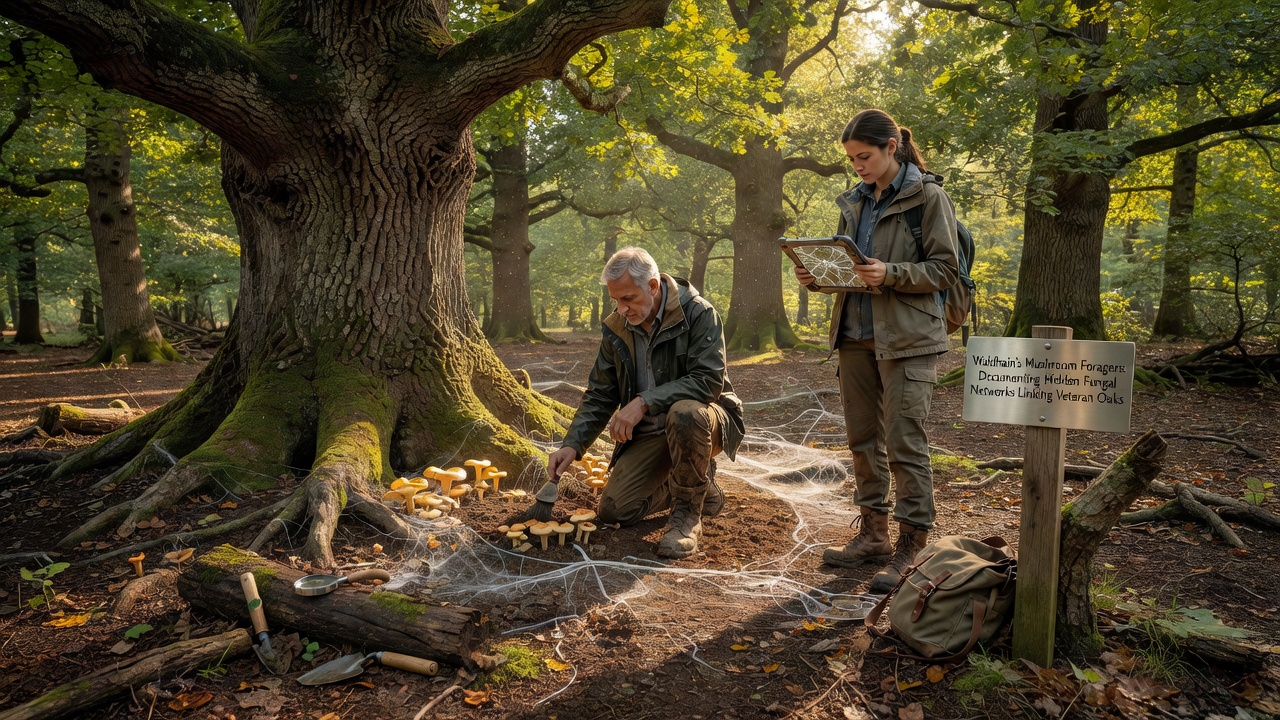
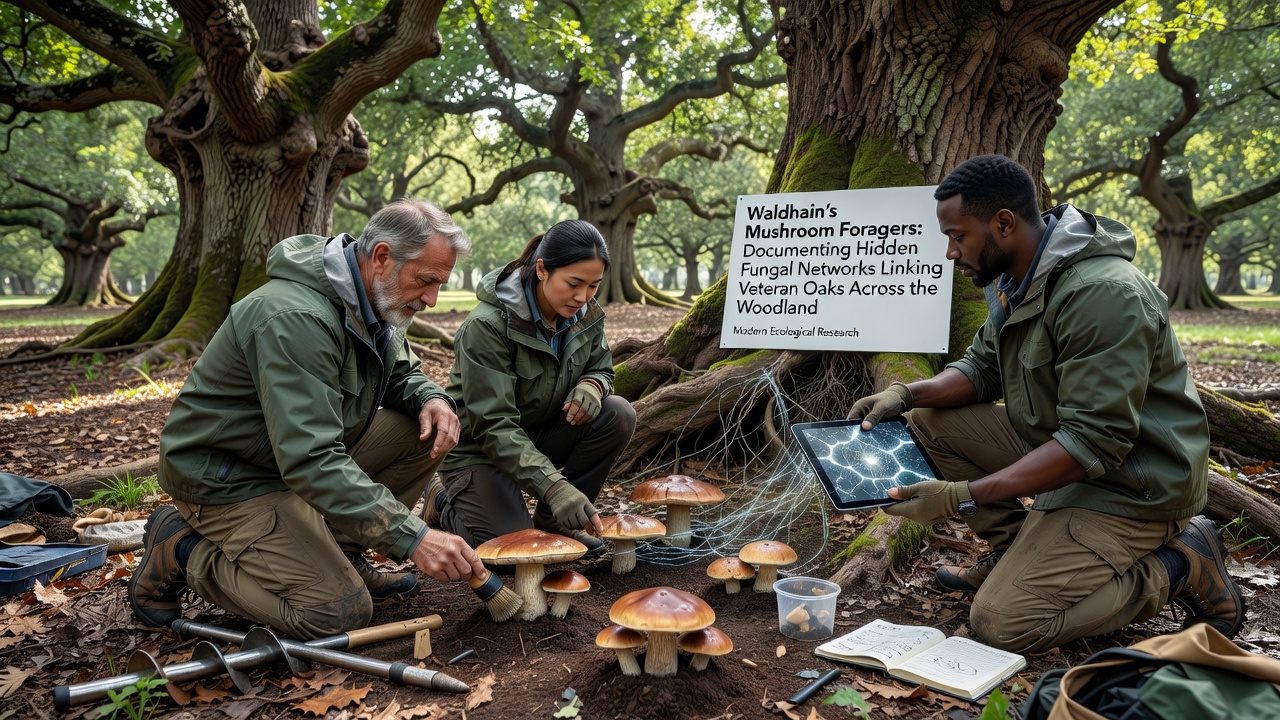
Local foragers in Waldhain have spent recent seasons mapping mycorrhizal connections that tie veteran oaks into single networks across the forest floor, and their records show how fruiting bodies appear in patterns that trace underground hyphal pathways between trees separated by tens of meters. Those who study the area note that the work began with repeated visits to the same stands where oak roots had been exposed by erosion, allowing volunteers to collect soil cores alongside visible mushroom clusters.
Mapping Techniques Used by Waldhain Volunteers
Teams divide the woodland into transects and record every mycorrhizal species they encounter, then cross-reference fruiting locations with root proximity data gathered through non-invasive ground-penetrating radar borrowed from regional forestry units. The resulting diagrams reveal dense clusters of connections centered on the oldest trees, while younger oaks on the edges link into the same system through shorter hyphal bridges. Observers point out that these maps grow more detailed each season because foragers return to the same patches and compare notes on which species emerge after autumn rains.
Species Documented and Their Roles
Among the fungi most frequently recorded are members of the genus Russula and Lactarius, both known to form ectomycorrhizal associations with oak, and foragers have also noted the presence of truffle-like species whose underground fruiting bodies require careful excavation to confirm attachment points. Data collected over multiple years indicate that certain Russula species appear consistently beneath the same canopy gaps, suggesting stable host partnerships rather than random distribution. Soil samples analyzed at cooperating laboratories confirm that carbon and nutrient exchange occurs along these pathways, with isotope tracing methods showing movement from larger oaks toward smaller neighbors during periods of stress.
Findings from November 2026 Surveys
During November 2026 monitoring rounds, volunteers added new transects after heavy storms exposed additional root zones, and the updated records show that previously separate clusters now link through newly documented hyphal strands running beneath a central clearing. These observations align with broader European research on veteran tree networks, where similar patterns have been measured in mixed deciduous stands. One transect in particular demonstrated that three oaks over 200 years old share a common fungal partner whose mycelium extends more than 40 meters in a single direction, connecting additional trees along the way.
Integration with Regional Research Efforts
Waldhain findings have been shared with mycologists working on comparable projects in other temperate forests, and the data contribute to larger datasets maintained by institutions such as the Canadian Forest Service that track mycorrhizal responses across climate gradients. In parallel, reports from the Swedish University of Agricultural Sciences on oak health in managed woodlands provide comparative benchmarks that highlight how undisturbed stands like those in Waldhain maintain higher fungal diversity. Foragers incorporate these external references when interpreting their own maps, adjusting expectations for seasonal variation based on published moisture and temperature thresholds.
Community Documentation Practices
Records are kept in both digital and paper formats so that future volunteers can revisit exact locations without relying on memory alone, and each entry includes photographs of fruiting bodies, GPS coordinates, and notes on surrounding vegetation. Monthly meetings allow participants to discuss anomalies such as sudden shifts in mushroom abundance after drought periods, and these discussions often lead to targeted follow-up surveys in the same month. The approach keeps the project grounded in repeated observation rather than single-season snapshots, building a timeline that spans multiple years of continuous effort.
Conclusion
The accumulated maps and soil data from Waldhain now form a growing archive that documents how fungal networks operate across generations of oak trees, and the foragers continue to refine their methods as new tools become available through regional partnerships. Their work supplies concrete examples of underground connectivity that researchers elsewhere can reference when modeling forest resilience, while the consistent seasonal returns ensure that the record remains current and verifiable.