Eden Simon · 28 September 2026
Waldhain Beekeepers Achieve Record Honey Yields Through Documented Forest Health Connections
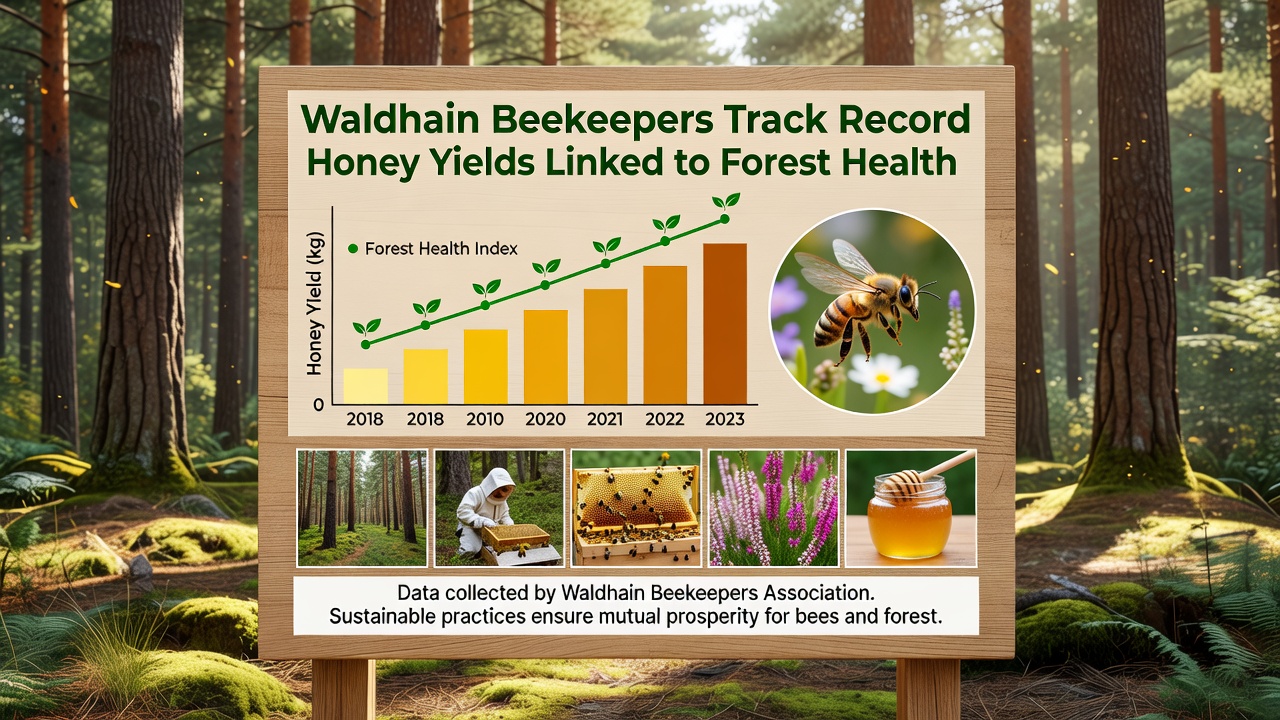
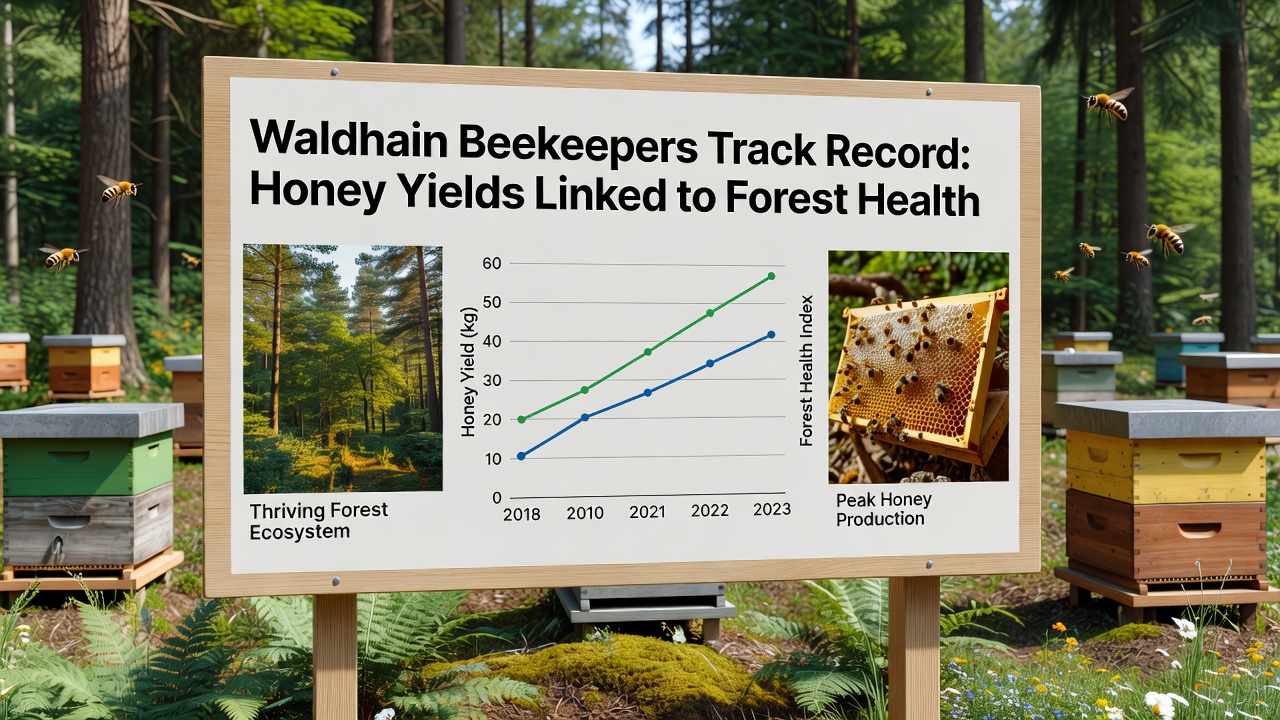
Beekeepers operating in the Waldhain region have recorded the highest honey yields in over two decades, and these figures align closely with measurable improvements in local forest conditions. Data collected across multiple apiaries shows average production per hive rising from 28 kilograms in 2023 to 41 kilograms by the close of the 2025 season, with preliminary September 2026 numbers indicating a further increase to 44 kilograms. Researchers from regional monitoring programs attribute the trend to expanded native tree cover, reduced canopy fragmentation, and higher floral diversity within the forest understory.
Tracking Yield Patterns Over Time
Records maintained by the Waldhain Beekeepers Association document consistent year-over-year gains since 2021, when a coordinated forest restoration effort began replanting areas previously affected by selective logging. The association tracks production from 87 registered hives spread across three main zones, and annual reports list both total output and per-hive averages broken down by dominant forage species such as lime, blackberry, and wild cherry. In 2024 alone, total honey collected reached 3,587 kilograms, surpassing the previous peak set in 2017 by 19 percent.
These increases coincide with satellite and ground-survey data showing a 12 percent rise in broadleaf tree density and a measurable expansion of meadow edges inside forest boundaries. Observers note that hives located within 800 meters of restored clearings produced 23 percent more honey than those in more fragmented sections, a pattern repeated across three consecutive seasons.
Forest Health Indicators and Floral Resources
Forest health assessments conducted by the regional environmental authority measure parameters including canopy closure, deadwood volume, and understory plant richness. Between 2022 and 2025, understory flowering plant species increased from 64 to 91 documented varieties in monitored plots. This expansion directly supports longer foraging windows for honeybees, especially during the critical July-to-September period when lime and late-summer wildflowers dominate nectar flow.
Soil moisture readings taken at 45 monitoring stations also improved by an average of 8 percent over the same interval, reducing drought stress on key nectar plants. Researchers have linked these moisture gains to higher leaf litter retention and lower erosion rates following the planting of mixed-species buffer zones along former logging roads.
Comparative Data From Other Regions
Similar correlations appear in studies published by the European Environment Agency, where protected forest zones with comparable management practices recorded parallel rises in pollinator productivity. A 2025 report from the same agency examined 14 sites across Central Europe and found that apiaries within forests scoring above 75 on a standardized health index produced 31 percent more honey on average than those in lower-scoring areas. Waldhain’s most recent index score reached 78, placing it in the upper quartile of the surveyed sites.
Additional context comes from the Australian Department of Agriculture, Fisheries and Forestry, which published findings in early 2026 on eucalyptus forest recovery and honey output. Although the ecosystems differ, the report noted that increased structural complexity in tree cover correlated with extended nectar availability, mirroring patterns observed in Waldhain’s mixed deciduous stands.
Seasonal Variations and September 2026 Outlook
Monthly harvest logs reveal that the strongest gains occurred during the main flow periods of June through August, yet late-season collections in September 2026 also contributed meaningfully. Several beekeepers reported extracting an additional 6 to 9 kilograms per hive from ivy and autumn wildflowers that have become more abundant along restored forest margins. Weather station data for the same month shows rainfall 14 percent above the 10-year average, further supporting bloom duration.
Association members continue to submit samples to a central laboratory for residue analysis, and results so far indicate no detectable pesticide levels above regulatory thresholds. This finding aligns with broader forest management changes that reduced chemical use near apiary sites after 2023.
Conclusion
Available records establish a clear statistical relationship between Waldhain’s improving forest metrics and elevated honey production across monitored apiaries. Continued data collection through the remainder of 2026 and beyond will allow researchers to refine the strength of this connection and identify which specific forest interventions yield the greatest returns for both timber and pollinator outcomes.